COBRA Premium Subsidies vs. ACA Marketplace Credits: 2026 Costs
Advertisements
Comparing COBRA Premium Subsidies vs. ACA Marketplace Credits in 2026 helps Americans understand healthcare costs, eligibility requirements, enrollment deadlines, and financial assistance options after losing employer-sponsored health insurance.
Understanding COBRA Premium Subsidies vs. ACA Marketplace Credits is essential for Americans seeking affordable healthcare coverage following employment changes, reduced working hours, or other qualifying circumstances.
With the expiration of enhanced Marketplace subsidies at the end of 2025, individuals and families must carefully evaluate their available health insurance options throughout 2026.
This guide examines coverage requirements, monthly premiums, financial assistance, provider networks, and enrollment procedures to help consumers make informed decisions about their healthcare expenses.
Understanding COBRA Premium Subsidies in 2026
COBRA, officially known as the Consolidated Omnibus Budget Reconciliation Act, allows eligible individuals and their dependents to temporarily maintain employer-sponsored health insurance following certain qualifying events.
When comparing COBRA Premium Subsidies vs. ACA Marketplace Credits, consumers should understand that COBRA generally requires beneficiaries to pay the full cost of their previous coverage.
Although temporary federal COBRA subsidies have existed during previous economic emergencies, consumers should not assume similar nationwide financial assistance is available for their coverage in 2026.
Eligibility for COBRA Continuation Coverage
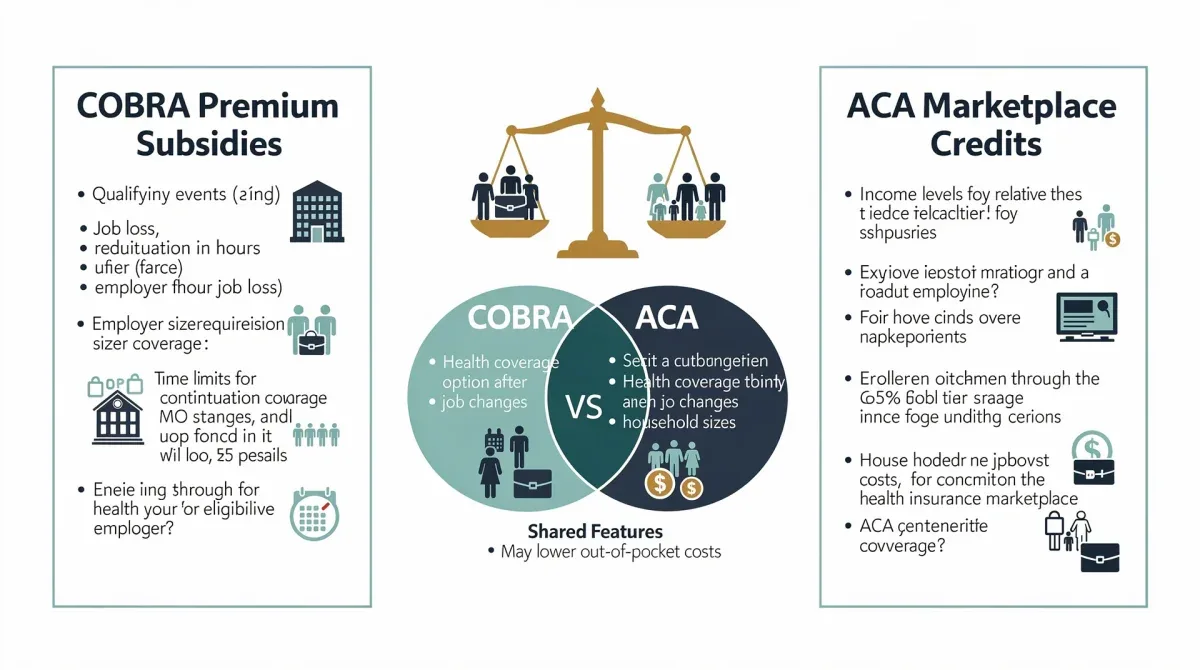
Federal COBRA generally applies to employer-sponsored group health plans maintained by qualifying employers with at least 20 employees, subject to applicable regulations and specific exceptions.
Qualifying events can include employment termination for reasons other than gross misconduct, reduced working hours, divorce, or other circumstances that cause eligible beneficiaries to lose coverage.
Depending on the qualifying event and individual circumstances, continuation coverage may remain available for 18 to 36 months, providing temporary protection during significant personal or professional transitions.
Understanding COBRA Premium Costs
Standard COBRA premiums can reach 102% of the total group health plan cost, reflecting both previous employer and employee contributions alongside a possible administrative charge.
These expenses make effective financial planning especially important for households experiencing employment changes, reduced earnings, or unexpected interruptions to their regular sources of income.
The comparison of COBRA Premium Subsidies vs. ACA Marketplace Credits should also account for any temporary employer contributions offered through severance agreements or other arrangements.
Navigating ACA Marketplace Credits in 2026
The Affordable Care Act Marketplace provides access to individual and family health insurance plans, with income-based financial assistance available to applicants who satisfy applicable federal eligibility requirements.
Eligible households may receive premium tax credits that reduce monthly insurance expenses, while certain applicants may also qualify for additional assistance with deductibles and other healthcare costs.
When evaluating COBRA Premium Subsidies vs. ACA Marketplace Credits, consumers should calculate their estimated annual household income to determine whether Marketplace assistance could provide meaningful financial savings.
Changes to Enhanced ACA Subsidies
The temporary enhanced premium tax credits introduced under the American Rescue Plan Act and extended through the Inflation Reduction Act expired on December 31, 2025.
According to the federal government's official Marketplace guidance concerning premium tax credits, eligible consumers may experience higher monthly insurance payments in 2026 following the expiration of these additional savings.
Regular ACA premium tax credits remain available to qualifying households, although eligibility and assistance amounts differ from the enhanced financial support previously available through 2025.
Income Requirements for Marketplace Assistance
Regular premium tax credit eligibility generally depends on projected household income, family size, access to other qualifying health coverage, and additional requirements established under federal law.
For 2026, household income generally must fall between 100% and 400% of the applicable federal poverty level, subject to eligibility exceptions and other program requirements.
Accurate income estimates are particularly important when comparing COBRA Premium Subsidies vs. ACA Marketplace Credits, since employment transitions can significantly change a household's annual financial circumstances.
Comparing Eligibility and Enrollment Requirements
COBRA and ACA Marketplace plans follow different enrollment procedures, offering distinct pathways for individuals and families who need health insurance following the loss of employer-sponsored coverage.
COBRA eligibility depends primarily on previous group health coverage and a qualifying event, while Marketplace enrollment follows federal or state exchange requirements and applicable enrollment periods.
Understanding these differences helps consumers approach COBRA Premium Subsidies vs. ACA Marketplace Credits strategically, reducing the likelihood of missed deadlines or unexpected interruptions in healthcare coverage.
Key Differences in Enrollment Periods
Eligible individuals generally have at least 60 days to elect COBRA, measured from the later of the coverage termination date or the delivery of their election notice.
Losing employer-sponsored health insurance may also trigger a Special Enrollment Period, allowing eligible consumers to purchase Marketplace coverage outside the applicable annual Open Enrollment Period.
Because enrollment deadlines and coverage start dates may differ, individuals should review both options promptly after experiencing a qualifying event that affects their existing healthcare benefits.
Avoiding Unexpected Gaps in Healthcare Coverage
Healthcare coverage interruptions can create substantial financial difficulties, particularly when individuals require prescription medications, ongoing medical treatment, or access to specialized healthcare services during employment transitions.
Consumers comparing COBRA Premium Subsidies vs. ACA Marketplace Credits should confirm when their existing insurance ends and when their selected replacement coverage would officially become effective.
Voluntarily ending COBRA coverage before its scheduled expiration does not generally create a new Marketplace enrollment opportunity, making careful coordination of coverage transitions especially important.
Cost Implications for 2026 Healthcare Benefits
Monthly premiums represent only one component of healthcare expenses, making it important for individuals to evaluate deductibles, copayments, coinsurance, and annual out-of-pocket limits alongside insurance prices.
Unsubsidized COBRA coverage can involve considerable monthly expenses, while ACA Marketplace plans may provide reduced premiums for households that satisfy applicable financial and eligibility requirements.
A comprehensive comparison of COBRA Premium Subsidies vs. ACA Marketplace Credits should consider anticipated medical expenses throughout the coverage period rather than focusing exclusively on monthly premiums.
Analyzing Monthly Premium Differences
When COBRA subsidies or employer contributions are unavailable, beneficiaries generally assume responsibility for the entire group insurance premium and any permitted administrative charges associated with continuation coverage.
Marketplace premium tax credits can reduce monthly insurance expenses for qualifying households, although the amount of available assistance depends on personal circumstances and applicable federal calculations.
Comparing actual insurance quotes provides a more reliable understanding of COBRA Premium Subsidies vs. ACA Marketplace Credits than relying on national averages or generalized premium estimates.
Understanding Deductibles and Out-of-Pocket Expenses
A health insurance deductible represents the amount an enrollee may need to pay for certain covered services before their insurance begins contributing toward applicable medical expenses.
Choosing COBRA may allow individuals to retain deductible progress within the same plan year, while switching to Marketplace coverage generally introduces a separate deductible and cost-sharing structure.
Consumers should review each plan's benefit summary carefully, particularly when anticipated medical procedures, ongoing prescriptions, or regular specialist appointments could significantly influence total annual healthcare spending.
Plan Choices and Healthcare Provider Networks
Provider networks play an important role in determining whether health insurance meets individual needs, particularly for patients who depend on established healthcare professionals and specialized medical facilities.
COBRA typically continues the employer's existing group health plan, while ACA Marketplace coverage may involve different insurance companies, provider networks, prescription formularies, and healthcare referral requirements.
When comparing COBRA Premium Subsidies vs. ACA Marketplace Credits, individuals should evaluate the practical consequences of changing healthcare providers alongside the potential financial advantages of alternative coverage.
Maintaining Existing Healthcare Relationships
Continuing an existing employer-sponsored health plan may be valuable for individuals undergoing treatment, managing chronic medical conditions, or maintaining established relationships with trusted healthcare providers.
Marketplace applicants should verify that preferred physicians, hospitals, specialists, and prescription medications are covered under each prospective plan before completing their enrollment and making financial commitments.
Although COBRA may provide greater continuity of care, employer plan changes can still affect benefits and networks, making it important to confirm current coverage details directly.
Understanding Marketplace Plan Categories
ACA Marketplace plans generally use Bronze, Silver, Gold, and Platinum categories to describe how healthcare expenses are distributed between insurance companies and enrolled consumers.
Lower-premium plans may involve higher deductibles or cost-sharing expenses, while higher-premium alternatives may provide more predictable financial arrangements for individuals who frequently access healthcare services.
These differences strengthen the importance of comparing COBRA Premium Subsidies vs. ACA Marketplace Credits using realistic healthcare expectations rather than selecting coverage solely according to premium affordability.
Legislative and Financial Outlook for 2026
Healthcare affordability remains an important concern throughout the United States, particularly following the expiration of temporary enhanced Marketplace tax credits that previously reduced monthly premium expenses.
The current comparison between COBRA and ACA coverage reflects existing eligibility rules, available financial assistance, local insurance markets, and individual employer arrangements rather than hypothetical future subsidies.
Consumers evaluating COBRA Premium Subsidies vs. ACA Marketplace Credits should distinguish between officially enacted legislation and policy proposals that have not become applicable federal healthcare requirements.
Monitoring Future Healthcare Policy Changes
Future legislation could modify premium tax credits, eligibility thresholds, or other financial assistance programs, potentially influencing the affordability of health insurance for different groups of Americans.
However, households should base current insurance decisions on confirmed regulations and actual coverage costs rather than anticipating legislative developments that may not occur within their enrollment deadlines.
Regularly reviewing official government announcements and maintaining updated Marketplace information can help individuals respond appropriately to changes that may affect their eligibility or monthly insurance payments.
Strategic Considerations for Individuals and Families
Selecting appropriate health insurance requires evaluating household finances, anticipated medical needs, available provider networks, and the expected duration of coverage following a qualifying life event.
The decision between COBRA Premium Subsidies vs. ACA Marketplace Credits becomes more manageable when individuals compare written insurance quotes and detailed benefit summaries based on their circumstances.
Rather than assuming either option is universally more affordable, households should identify which coverage offers the most suitable balance between financial obligations and practical healthcare requirements.
Assessing Household Income and Financial Resources
Projected annual household income can significantly influence Marketplace premium tax credit eligibility, particularly when employment changes alter earnings during different portions of the same calendar year.
Households with uncertain income should review their estimates periodically and report relevant financial changes to the Marketplace, helping reduce potential complications when reconciling advance tax credits.
Consulting a qualified benefits specialist or experienced financial advisor may provide additional assistance when evaluating insurance expenses within a broader household budgeting strategy.
Evaluating Short-Term and Long-Term Coverage Needs
COBRA can provide a temporary healthcare bridge for individuals expecting to obtain new employer-sponsored insurance, especially when maintaining existing medical arrangements remains an important personal priority.
Marketplace plans may offer longer-term coverage opportunities for individuals who anticipate extended self-employment, ongoing employment transitions, or continued absence of affordable employer-sponsored health insurance.
When comparing COBRA Premium Subsidies vs. ACA Marketplace Credits, the expected coverage duration should be incorporated into calculations involving premiums, deductibles, healthcare access, and household financial stability.
The Role of Employer-Sponsored Health Plans
Previous employer-sponsored coverage provides the foundation for determining COBRA benefits, including the insurance company's network, available medical services, premium structure, and applicable cost-sharing requirements.
Individuals often underestimate the total cost of employer-sponsored insurance because a substantial portion of monthly premiums may previously have been paid directly by their employer.
Understanding the full value of former workplace benefits provides important context when comparing COBRA Premium Subsidies vs. ACA Marketplace Credits and evaluating alternative health insurance arrangements.
How Employer Contributions Affect COBRA Costs
Employers frequently contribute toward group health insurance premiums, reducing the amount employees pay directly through payroll deductions while maintaining access to their selected healthcare benefits.
Following employment termination, individuals electing COBRA generally become responsible for these previously subsidized expenses unless their employer voluntarily provides continued financial support through a separate arrangement.
Reviewing severance agreements and obtaining written premium information can help beneficiaries determine whether temporary employer contributions influence the financial attractiveness of continuing their existing group coverage.
Comparing COBRA and ACA Healthcare Costs With a Practical Example
Consider an illustrative employer-sponsored health plan with a total monthly premium of $650, where the employee previously contributed $150 and the employer paid the remaining $500.
If the continuation premium reaches 102%, that individual's monthly COBRA expense could become $663, assuming no employer subsidy or other financial contribution remains available after employment ends.
A hypothetical Marketplace plan costing $500 before a $200 premium tax credit would leave a $300 monthly premium, although actual quotes and eligibility vary considerably.
Evaluating Total Expenses Beyond Monthly Premiums
In this illustrative comparison, Marketplace coverage would involve lower monthly premiums, but differences in deductibles, provider networks, and prescription benefits could influence the overall financial outcome.
Someone who has already satisfied a substantial portion of their existing deductible might benefit from maintaining COBRA, depending on anticipated healthcare needs and remaining coverage duration.
This example demonstrates why COBRA Premium Subsidies vs. ACA Marketplace Credits should be evaluated through personalized cost estimates rather than assuming that lower premiums always produce lower overall expenses.
Side-by-Side Comparison of COBRA and ACA Coverage
Both coverage options offer potential advantages depending on individual circumstances, making a structured comparison helpful when evaluating eligibility, financial assistance, medical benefits, and enrollment procedures.
COBRA generally emphasizes continuity of existing employer-sponsored coverage, while Marketplace insurance provides access to alternative plans and potential government financial assistance for households meeting applicable requirements.
The following table summarizes important differences in COBRA Premium Subsidies vs. ACA Marketplace Credits, helping consumers identify relevant considerations before selecting their preferred healthcare coverage.
Comparison Point | COBRA Coverage | ACA Marketplace Coverage |
|---|---|---|
Eligibility Basis | Previous qualifying group coverage and qualifying event. | Marketplace eligibility and applicable enrollment requirements. |
Monthly Premiums | Generally up to 102% of the total group plan cost. | Based on selected coverage and available financial assistance. |
Financial Assistance | Possible employer contributions or other payment arrangements. | Regular federal premium tax credits for eligible households. |
Enhanced Federal Subsidies | No general nationwide premium subsidy assumed for 2026. | Temporary enhanced credits expired December 31, 2025. |
Coverage Duration | Generally 18 to 36 months, depending on circumstances. | Annual coverage, subject to continued eligibility and renewal. |
Enrollment Requirements | Generally a minimum 60-day election period. | Open Enrollment or qualifying Special Enrollment Period. |
Healthcare Providers | Existing employer plan network, subject to plan changes. | Network depends on the selected insurance plan. |
Deductible Considerations | Existing plan-year deductible progress may be retained. | Generally introduces a separate deductible structure. |
Frequently Asked Questions About 2026 Healthcare Benefits
What are the main differences between COBRA and ACA Marketplace coverage?
COBRA temporarily continues existing employer-sponsored health insurance, while Marketplace coverage offers individual and family insurance plans with potential income-based financial assistance. Their eligibility requirements, premiums, and provider networks may differ considerably.
Are federal COBRA premium subsidies available in 2026?
Consumers should not assume that a general nationwide COBRA subsidy is available in 2026. However, some employers may voluntarily contribute toward continuation coverage through severance agreements or other arrangements.
Did the enhanced ACA Marketplace credits expire?
Yes. The temporary enhanced premium tax credits expired on December 31, 2025. Regular premium tax credits remain available to qualifying individuals and households under applicable federal requirements.
Can I qualify for Marketplace credits after losing my job?
Potentially. Eligibility depends on projected annual household income, household size, access to other qualifying health coverage, and additional Marketplace requirements. Losing employer-sponsored coverage may also create a Special Enrollment Period.
Is COBRA always more expensive than Marketplace insurance?
No. Although unsubsidized COBRA often involves higher premiums, employer contributions, existing deductible progress, prescription coverage, and medical requirements can make continuation coverage financially preferable in certain circumstances.
Can I switch from COBRA to an ACA Marketplace plan?
Yes, during applicable Open Enrollment periods or when a qualifying Special Enrollment Period is available. Voluntarily canceling COBRA before its scheduled expiration generally does not independently create a new enrollment opportunity.
How long can I maintain COBRA coverage?
COBRA commonly provides up to 18 months of continuation coverage following employment termination or reduced working hours. Certain qualifying circumstances may extend coverage to 29 or 36 months.
Can COBRA and Marketplace tax credits be used together?
Generally, Marketplace premium tax credits are not available for months when an individual is covered by qualifying COBRA insurance. However, simply being offered COBRA does not necessarily prevent Marketplace tax credit eligibility.
Which option is better for individuals receiving ongoing medical treatment?
COBRA may offer advantages when maintaining current healthcare providers and treatment arrangements is particularly important. Marketplace coverage may also meet these needs if the selected plan includes appropriate providers and benefits.
How should I compare COBRA Premium Subsidies vs. ACA Marketplace Credits?
Obtain actual premium quotes, estimate household income, review healthcare provider networks, compare deductibles and prescription benefits, and confirm enrollment deadlines before selecting the coverage that best fits your circumstances.
Conclusion: Making Strategic Healthcare Decisions in 2026
Understanding COBRA Premium Subsidies vs. ACA Marketplace Credits helps individuals and families evaluate healthcare coverage more effectively following employment transitions, changes in income, or other qualifying circumstances.
Although enhanced ACA subsidies have expired, regular premium tax credits and eligible COBRA continuation coverage remain important options for Americans seeking reliable access to health insurance.
By comparing actual premiums, medical expenses, provider networks, and current eligibility requirements, consumers can make informed coverage decisions that support their healthcare needs and household financial stability.