Employer Commuter Benefits 2026: $315 Pre-Tax Exclusion
Advertisements
Employer Commuter Benefits in 2026: Using the $340 Monthly Pre-Tax Exclusion to Cut Transit Expenses explains how eligible American employees can reduce taxable income through qualified transportation benefits.
The IRS has established a $340 monthly exclusion for transit passes and qualifying commuter vanpool transportation, along with a separate $340 monthly limit for qualified parking.
Employer commuter benefits in 2026 provide an opportunity for eligible American workers to reduce the tax burden associated with public transportation, qualified vanpools, and employer-provided parking arrangements.
The Internal Revenue Service has increased the monthly exclusion for qualified commuter transportation from $325 in 2025 to $340 in 2026. Qualified parking receives a separate monthly exclusion of the same amount.
Understanding how these benefits work can help employees estimate potential savings, while employers can review payroll procedures and communicate the applicable limits accurately.
Understanding the $340 Monthly Pre-Tax Exclusion for 2026
The IRS established a $340 monthly limit for the combined value of qualified transit passes and commuter highway vehicle transportation during the 2026 tax year.
Eligible employers may offer these benefits through qualifying arrangements, including employee salary reductions, allowing certain commuting expenses to be paid using amounts excluded from federal taxable wages.
For employees reviewing employer commuter benefits in 2026, the important distinction is that the $340 limit applies to qualifying transit and vanpool expenses, while eligible parking has a separate exclusion.
How the Pre-Tax Exclusion Works
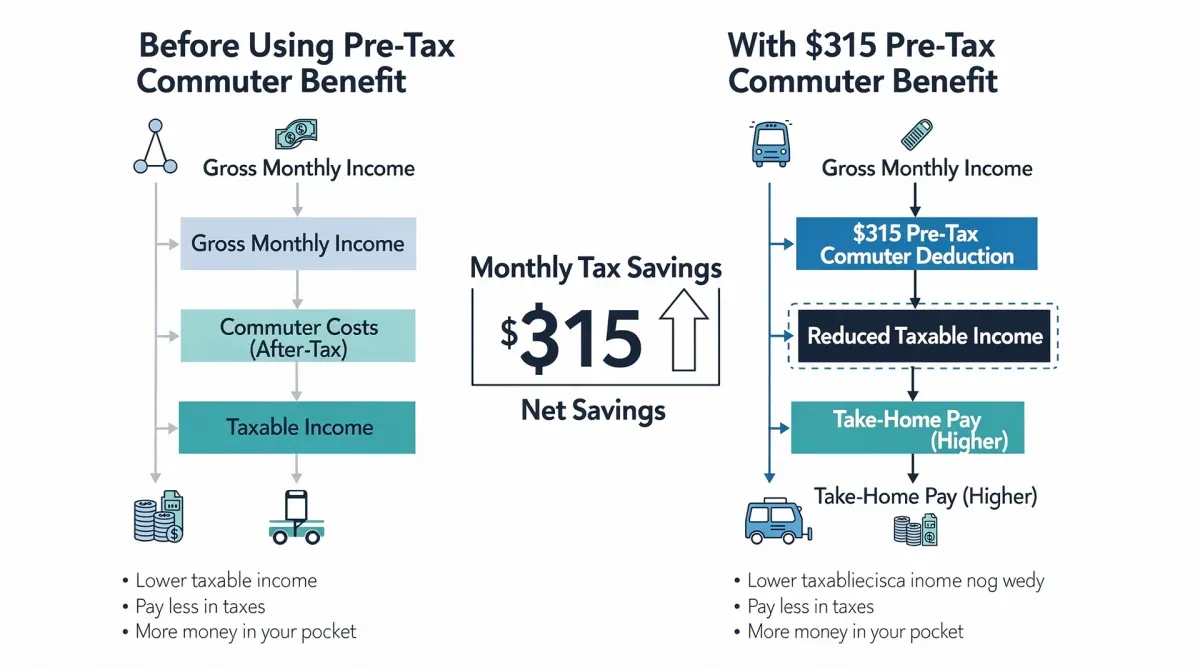
A commuter benefit program can allow employees to designate part of their compensation toward qualified transportation expenses before applicable federal income and employment taxes are calculated.
For example, an employee spending $200 monthly on eligible transit fares may be able to use $200 in pre-tax benefits rather than paying those expenses entirely from after-tax earnings.
When using employer commuter benefits in 2026, employees should confirm the available benefit options, eligible expenses, payroll deductions, and procedures established by their employer.
Monthly Transit Limit: Up to $340 for qualifying transit passes and commuter highway vehicle transportation combined.
Qualified Parking: A separate exclusion of up to $340 per month.
Payment Methods: Benefits may be administered through transit passes, qualifying payment cards, or permitted reimbursement arrangements.
Unused Balances: Treatment depends on the benefit arrangement and applicable rules; unused amounts do not create unlimited additional monthly exclusions.
Impact on Employees: Real Savings on Transit Expenses
The primary financial advantage of qualified commuter benefits is the exclusion of eligible transportation costs from certain taxable wages, reducing the amount of income subject to applicable taxes.
For commuters who regularly purchase train passes, bus fares, or qualifying vanpool transportation, the benefit can lower the effective after-tax cost of travelling to work.
The value of employer commuter benefits in 2026 depends on actual commuting expenses, payroll arrangements, federal tax circumstances, and whether state or local tax rules follow the federal treatment.
Calculating Your Potential Savings
Consider an employee who uses the full $340 monthly transit exclusion for twelve months. That represents $4,080 in annual qualifying transportation expenses excluded from applicable taxable wages.
At an illustrative combined marginal tax rate of 25%, the employee could save approximately $1,020 annually. This example assumes the full exclusion is available and that the combined rate already reflects all taxes included in the calculation.
Actual savings may be higher or lower depending on the employee's federal tax bracket, applicable payroll taxes, state treatment, and eligible commuting costs, so individual calculations should use realistic assumptions.
Advantages for Employers Offering Commuter Benefits in 2026
Employers may also benefit financially from qualified transportation arrangements because eligible salary reductions can decrease compensation subject to certain employer payroll taxes.
Beyond potential tax savings, commuter benefit programs can make workplace compensation packages more attractive to employees who rely on public transportation or face substantial commuting expenses.
Organizations considering employer commuter benefits in 2026 should evaluate program administration costs, employee participation, applicable local requirements, and potential payroll savings before selecting a provider.
Boosting Employee Morale and Productivity
Transportation expenses are a recurring concern for many workers, particularly those commuting through metropolitan areas where fares and parking charges can affect household budgets.
Providing access to eligible commuter benefits can demonstrate that an employer recognizes these costs and is willing to offer practical support through its compensation arrangements.
Although improved morale or retention cannot be guaranteed, communicating transportation benefits clearly may strengthen employees' understanding of their total compensation and available workplace resources.
Payroll Tax Savings: Eligible employee salary reductions may reduce employer employment tax obligations.
Employee Support: Programs can help workers manage recurring transportation expenses.
Benefits Communication: A clear offering can improve awareness of available compensation options.
Commuting Flexibility: Eligible transit and parking options can accommodate different transportation needs.
Navigating IRS Regulations and Compliance for 2026
Compliance with federal transportation fringe benefit rules requires employers to understand eligible expenses, monthly exclusions, administrative procedures, and the treatment of amounts exceeding the applicable limits.
For 2026, the combined transit pass and qualifying commuter highway vehicle exclusion is $340 per month, while qualified parking has a separate $340 monthly limitation.
Employers managing employer commuter benefits in 2026 should review the IRS Publication 15-B, Employer's Tax Guide to Fringe Benefits, which explains qualified transportation benefits, exclusions, and relevant payroll tax rules.
Key Compliance Considerations
Employers should confirm that their payroll systems apply the current exclusion limits and distinguish qualifying transportation expenses from nonqualified personal travel or ordinary vehicle expenses.
Benefit administrators must also consider the rules governing cash reimbursements, transit passes, qualifying commuter vehicles, and documentation required for permitted reimbursement arrangements.
When updating employer commuter benefits in 2026, organizations should communicate the revised limits to employees and review whether their existing benefit provider has incorporated the appropriate tax-year changes.
Promoting Sustainable Commuting Through Enhanced Benefits
Qualified transportation benefits may also support commuting arrangements that involve public transit and shared transportation rather than single-occupant vehicle travel.
For employees with reliable access to buses, rail services, ferries, or eligible vanpools, tax-favored commuting arrangements can make those options more financially attractive.
However, employer commuter benefits in 2026 do not guarantee reduced congestion or emissions, since the environmental impact depends on local transportation systems and how employees change their travel habits.
The Role of Employers in Driving Change
Employers can help workers understand their transportation options by providing information about eligible transit services, commuter benefit enrollment, and applicable payroll deduction procedures.
Organizations may also coordinate with local transportation providers or benefit administrators to improve access to qualifying passes and payment arrangements.
Clear communication about eligibility and commuting choices can make the benefit easier to use while supporting employees who prefer alternatives to driving alone.
Integrating Commuter Benefits into a Holistic Rewards Strategy
Transportation assistance can form part of a broader workplace benefits package that includes health coverage, retirement plans, paid leave, and other forms of employee support.
For workers commuting several times each week, access to pre-tax transit benefits may provide measurable financial value, especially when fares represent a significant recurring expense.
When positioning employer commuter benefits in 2026 within a total rewards strategy, employers should explain both the tax advantages and the limitations of eligible transportation arrangements.
Communicating the Value Proposition
Employees are more likely to understand commuter benefits when enrollment materials explain the applicable monthly limits, qualified expenses, available payment methods, and consequences of unused balances.
HR teams can provide examples showing how pre-tax deductions may affect take-home pay, while making clear that individual savings vary according to each employee's tax situation.
Organizations can also discuss employer commuter benefits in 2026 alongside other workplace programs, helping employees evaluate the combined value of their compensation and benefits.
Future Outlook: Evolution of Commuter Benefits Beyond 2026

Transportation benefit programs may continue adapting as workplace arrangements, public transit systems, and commuting habits change across American cities.
Hybrid work schedules can influence how frequently employees purchase transit passes, while digital payment systems may make qualifying transportation benefits easier to administer.
The continued relevance of employer commuter benefits in 2026 reflects the importance of providing practical transportation options, but future federal exclusion amounts will depend on official tax adjustments.
Anticipating Future Changes and Adaptations
The IRS periodically adjusts qualified transportation fringe benefit limits according to applicable inflation adjustment provisions, so employers should review official annual guidance before updating their programs.
Companies may also evaluate employee participation patterns, administrative costs, and changes in commuting frequency when deciding whether to modify their existing arrangements.
For now, employer commuter benefits in 2026 operate under the confirmed $340 monthly limits, and future increases should not be assumed until the IRS announces them.
Key Point | Brief Description |
|---|---|
2026 Exclusion Limit | The IRS allows up to $340 monthly for combined qualified transit passes and commuter highway vehicle transportation. |
Employee Savings | Eligible pre-tax transportation benefits can reduce taxable wages and applicable employment taxes. |
Employer Benefits | Qualifying salary reductions may lower employer payroll taxes and expand workplace benefit options. |
Compliance Focus | Employers must apply the appropriate limits, eligible expense definitions, and administration requirements. |
Frequently Asked Questions About Commuter Benefits in 2026
What is the new monthly pre-tax exclusion limit for 2026?▼
The IRS has established a $340 monthly exclusion for combined qualified transit passes and commuter highway vehicle transportation in 2026. Qualified parking has a separate $340 monthly limit. Employees can learn more about related workplace programs through benefits administration resources.
How do employees save money with this benefit?▼
Eligible workers can pay qualifying commuting expenses through employer arrangements that exclude permitted amounts from federal taxable wages. Savings depend on actual transportation costs, the employee's tax situation, and applicable payroll and state tax treatment.
Are there benefits for employers offering these commuter programs?▼
Employers may reduce certain payroll taxes when employees use qualifying pre-tax salary reductions. Commuter benefit programs can also provide employees with additional compensation options, although administrative expenses and participation should be considered.
What types of commuting expenses are eligible for the exclusion?▼
Qualified expenses generally include eligible transit passes, qualifying commuter highway vehicle transportation, and qualified parking. The parking exclusion is separate from the combined transit and vanpool limit. Ordinary personal vehicle fuel and standard individual commuting expenses are not automatically eligible.
What should employers do to comply with the 2026 changes?▼
Employers should update payroll settings to reflect the $340 limits, review eligible expense definitions, communicate enrollment requirements, and verify the procedures used by benefit administrators. Organizations can also explore digital benefits enrollment platforms for broader administrative considerations.
Looking Ahead
Employer commuter benefits in 2026 offer eligible American employees a practical way to reduce the after-tax cost of commuting through qualified transit and parking arrangements.
The confirmed $340 monthly exclusions provide additional room for tax-favored transportation benefits compared with 2025, while employees and employers must continue following applicable federal rules.
Understanding the available exclusions, qualifying expenses, and employer procedures can help workers make more informed transportation decisions while allowing organizations to maintain compliant and effective benefit programs.