Student Loan Forgiveness: 120-Payment Milestone Updates
Advertisements
Federal Student Loan Forgiveness Benefit examines the requirements borrowers must understand when pursuing Public Service Loan Forgiveness, known as PSLF. Changes to repayment plans, payment counting, and federal loan regulations make it essential to review current eligibility rules before taking action.
The latest federal student loan forgiveness updates are particularly important for government employees, nonprofit workers, and other borrowers who may qualify for relief after completing 120 eligible monthly payments.
However, the 120-payment requirement applies to PSLF, not every federal forgiveness program. Income-driven repayment plans have different timelines, and some previous administrative adjustments and consolidation opportunities have already expired.
Understanding the 120-Payment Milestone Under Revised Standards
The Public Service Loan Forgiveness program allows eligible borrowers to receive forgiveness of their remaining Direct Loan balances after completing 120 qualifying monthly payments while working full-time for an approved employer.
The payments do not need to be consecutive, but borrowers must satisfy the program's requirements concerning employment, loan eligibility, repayment plans, and qualifying payment periods.
Understanding federal student loan forgiveness updates requires distinguishing PSLF from income-driven repayment forgiveness, which generally follows longer repayment periods and does not use the same 120-payment eligibility milestone.
The Impact of IDR Account Adjustment
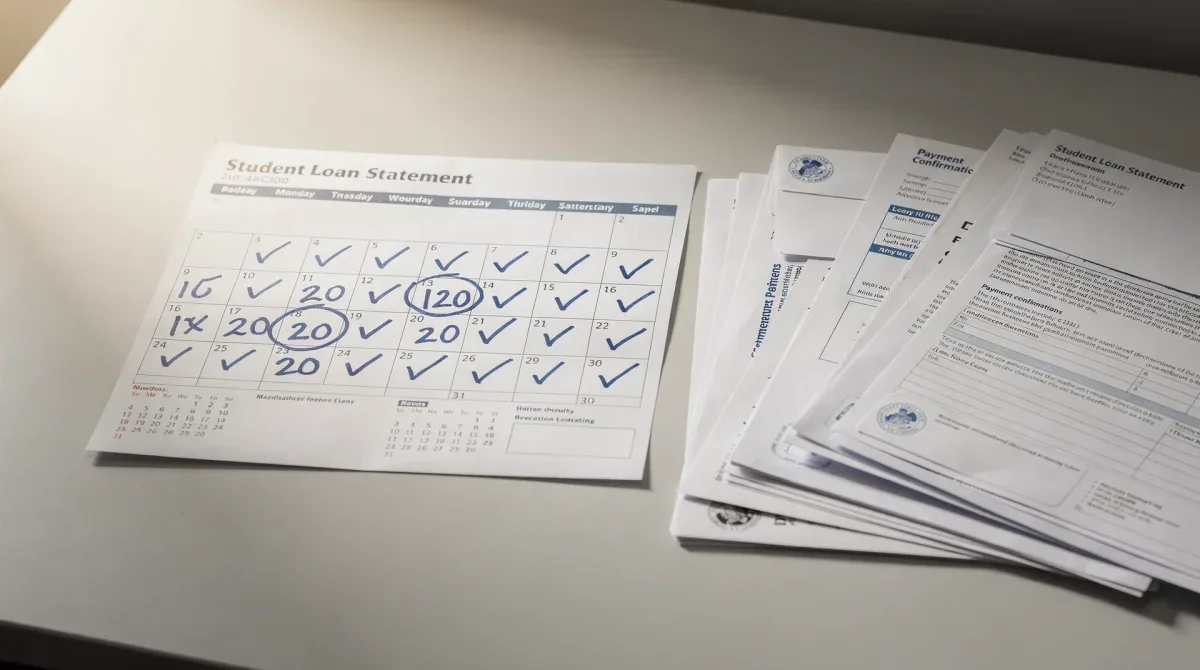
The one-time income-driven repayment account adjustment was introduced to address historical payment-counting problems affecting certain federal student loan borrowers.
Under the initiative, eligible repayment histories and specified periods of deferment or forbearance could receive additional credit toward qualifying repayment milestones.
These historical federal student loan forgiveness updates should not be confused with a new adjustment announced in 2026. Borrowers must check their current official payment records rather than assume that expired consolidation exceptions remain available.
Who Benefits from the Revised Standards?
Borrowers employed by qualifying government agencies or nonprofit organizations may benefit from PSLF when their loans and repayment histories meet the program's requirements.
People with previous certified employment, eligible repayment periods, or qualifying deferment situations should review their official payment counts to determine whether additional credit is available.
The federal student loan forgiveness updates do not provide automatic relief to everyone with federal education debt, and borrowers with defaulted loans or older loan types may face additional eligibility restrictions.
Public Service Workers: May qualify for PSLF after meeting the program's 120-payment requirement.
Long-Term Borrowers: May qualify for separate income-driven repayment forgiveness under applicable timelines.
Borrowers With Older Loans: Should verify whether consolidation is necessary and how it could affect existing payment credit.
Key Changes and Eligibility Criteria
Eligibility for federal student loan forgiveness depends on the specific program, the types of loans held, the repayment plan, and the borrower's employment history where applicable.
For PSLF, Direct Loans, qualifying public service employment, and eligible monthly payment periods remain central requirements, even as repayment plan options have changed.
Recent federal student loan forgiveness updates also reflect changes affecting income-driven repayment, including the termination of the SAVE Plan in 2026 and the availability of other repayment options for eligible borrowers.
Qualifying Payments Redefined
For PSLF, a qualifying payment generally involves meeting the applicable monthly payment requirements while working full-time for an eligible employer and participating in an accepted repayment plan.
Certain deferment and forbearance periods may qualify under specific rules, but borrowers should not assume that every month without a payment counts automatically toward forgiveness.
The federal student loan forgiveness updates also require attention to loan disbursement dates and repayment plan rules, since requirements can differ depending on when the borrower received federal loans.
Consolidation and Its Role in Forgiveness
Direct Consolidation Loans allow borrowers to combine certain eligible federal student loans into a new loan, potentially simplifying repayment or making older loan types eligible for particular programs.
However, the special consolidation deadline associated with the one-time IDR account adjustment ended on June 30, 2024. Current consolidation rules generally use a weighted-average calculation for qualifying payment credit on eligible Direct Loans.
Before consolidating under the current federal student loan forgiveness updates, borrowers should compare their existing payment counts and loan types because consolidation can change repayment terms, interest calculations, and forgiveness progress.
What to Do if You've Already Met 120 Payments
Borrowers who believe they have completed 120 qualifying PSLF payments should review their payment tracker and employment certification records through Federal Student Aid.
If qualifying employment has not been fully certified, submitting the appropriate PSLF form may be necessary before the Department of Education can confirm eligibility for forgiveness.
Under the federal student loan forgiveness updates, borrowers should not consolidate automatically after reaching 120 payments. Instead, they should verify existing loan eligibility and use official guidance to avoid unnecessary changes that could affect their accounts.
Navigating the Application and Review Process
Applying for Public Service Loan Forgiveness involves confirming the eligibility of the employer, reviewing the loan types, and submitting employment certification through the appropriate federal process.
Federal Student Aid provides an online PSLF Help Tool that allows borrowers to prepare forms, request employer certification, and monitor qualifying payment progress.
For borrowers following federal student loan forgiveness updates, maintaining accurate records and reviewing official account information is more reliable than depending on outdated application instructions or third-party promises.
Automatic Adjustments vs. Borrower Action
Some historical account corrections have been applied administratively, but PSLF applicants are still responsible for providing information needed to verify qualifying employment.
Borrowers may need to submit a PSLF form, update repayment plan selections, resolve loan eligibility questions, or contact their servicer about discrepancies.
The federal student loan forgiveness updates should not be interpreted as eliminating application requirements. Even borrowers who believe their payment history is complete should confirm that the federal system recognizes their qualifying periods.
Timeline for Forgiveness and Notifications
PSLF processing times may differ depending on the completeness of employment records, payment verification, and the status of individual loan accounts.
Borrowers can monitor their PSLF progress through StudentAid.gov, including certified employment periods and qualifying monthly payment counts.
When tracking federal student loan forgiveness updates, it is important to understand that reaching an estimated count of 120 payments is not the same as receiving official confirmation that the remaining balance has been discharged.
Common Pitfalls to Avoid
One common mistake involves assuming that all federal student loans automatically qualify for PSLF, even though the program requires Direct Loans or eligible consolidation into the Direct Loan program.
Another problem occurs when borrowers fail to certify employment, misunderstand repayment plan eligibility, or rely on obsolete deadlines from earlier account adjustment initiatives.
Reviewing current federal student loan forgiveness updates can help borrowers avoid unnecessary consolidation, incorrect assumptions about forbearance credit, and missed opportunities to address account discrepancies.
Loan Eligibility: Confirm whether existing loans qualify for PSLF.
Employment Certification: Submit forms regularly and after changing qualifying employers.
Payment Records: Compare official counts with personal documentation.
Outdated Deadlines: Do not assume expired consolidation exceptions remain available.
The Broader Impact of Revised Forgiveness Policies
Federal student loan forgiveness programs influence the financial planning of borrowers who work in public service or participate in qualifying long-term repayment arrangements.
For eligible borrowers, forgiveness can eliminate remaining federal loan balances after the relevant requirements have been satisfied, potentially changing household financial obligations.
However, the economic effects of federal student loan forgiveness updates depend on the number of eligible borrowers, the value of discharged debt, and the administrative rules in effect when forgiveness occurs.
Economic and Social Implications
Student loan repayment obligations can affect how borrowers allocate income toward housing, savings, retirement, and other financial priorities.
Receiving forgiveness may reduce financial pressure for an eligible borrower, although individual benefits vary according to outstanding balances and circumstances.
The discussion surrounding federal student loan forgiveness updates also includes broader questions about educational costs, public service employment, and mental health, without establishing that every borrower will experience the same outcome.
Future Outlook for Student Loan Forgiveness
Federal student loan policies continue to change through legislation, regulations, court decisions, and administrative guidance affecting repayment options and forgiveness eligibility.
In 2026, borrowers face an updated landscape that includes the end of the SAVE Plan and changes to available repayment arrangements, making current account information especially important.
Future federal student loan forgiveness updates should be evaluated using official announcements, particularly when they concern repayment plan transitions, qualifying payments, and the treatment of existing loan balances.
Resources for Borrowers
The U.S. Department of Education and Federal Student Aid provide official information about loan types, repayment plans, Public Service Loan Forgiveness, and related application procedures.
The official Public Service Loan Forgiveness guide explains the 120-payment requirement, qualifying employers, eligible loan types, repayment plans, and the PSLF application process.
Borrowers researching federal student loan forgiveness updates should also review their own StudentAid.gov accounts and communicate with authorized loan servicers when personalized information is necessary.
Stories from Borrowers: Real-World Impact
Borrowers seeking forgiveness may encounter different challenges depending on their careers, repayment histories, loan types, and experience with federal loan administration.
For example, a teacher with qualifying public service employment may need to confirm that all eligible years have been certified, while another borrower may need to resolve discrepancies involving previous repayment periods.
These examples illustrate issues relevant to federal student loan forgiveness updates, but they should not be mistaken for verified individual testimonials or evidence that all borrowers qualify for immediate discharge.
Testimonials of Forgiveness

Personal stories about federal student loan forgiveness can demonstrate the importance of accurate payment records, employer certification, and clear communication with loan servicers.
However, specific accounts involving an Ohio teacher receiving $45,000 in forgiveness and a California social worker receiving $60,000 could not be independently verified from the information provided in the original article.
Rather than presenting unverified testimonials as factual evidence, coverage of federal student loan forgiveness updates should emphasize documented eligibility procedures and explain how borrowers can confirm their own forgiveness status.
Challenges and Continued Advocacy
Borrowers may still experience difficulties related to payment counts, employment verification, repayment plan changes, or communication with loan servicers.
When problems occur, maintaining records of previous payments, certification forms, account statements, and written correspondence can support requests for review.
Advocacy surrounding federal student loan forgiveness updates continues to address administrative complexity and borrower protections, but individual disputes must be handled through the appropriate official channels.
Key Point | Brief Description |
|---|---|
120-Payment Milestone | PSLF generally requires 120 qualifying monthly payments while working full-time for an eligible employer. |
IDR Account Adjustment | A historical one-time initiative that reviewed qualifying repayment periods; it is not a newly announced 2026 program. |
Consolidation Benefits | May help certain older loan types qualify, but current payment-credit calculations differ from the expired adjustment exception. |
Eligibility Expansion | Only qualifying repayment periods and specified deferment or forbearance situations can count toward applicable forgiveness programs. |
Frequently Asked Questions About Student Loan Forgiveness Updates
What are the main Federal Student Loan Forgiveness Benefit Updates: Meeting the 120-Payment Milestone Under Revised Standards?▼
The main federal student loan forgiveness updates concern the current requirements for PSLF, changes to repayment plan availability, and the treatment of qualifying payment periods. PSLF requires 120 qualifying monthly payments and eligible employment. The historical one-time IDR adjustment should not be confused with a new 2026 benefit, and ordinary IDR forgiveness follows different timelines.
Do I need to apply for the IDR Account Adjustment?▼
The one-time IDR account adjustment was a historical administrative initiative, not an open-ended application program. Borrowers should review their existing payment counts and current plan eligibility. Any new consolidation request must be evaluated under the rules currently in force, not under the expired June 2024 special adjustment deadline.
How do I know if I've reached the 120-payment milestone?▼
Sign in to StudentAid.gov and review your PSLF payment progress. Confirm that all qualifying employment periods have been certified through the PSLF form. If the count reaches 120, follow the official instructions for forgiveness review and wait for confirmation before assuming the balance has been discharged.
What if my loans are not Direct Loans?▼
PSLF generally requires Direct Loans. Some older federal loans, including certain FFEL and Perkins Loans, may become eligible after consolidation into the Direct Loan program. However, consolidation can affect previous payment credit, so borrowers should evaluate their specific loan histories and current federal rules before proceeding.
What should I do if my payment count seems incorrect?▼
Compare the official PSLF payment tracker with employment certification records and personal payment documentation. If information is missing, submit the appropriate certification or request a review using Federal Student Aid procedures. Contact your loan servicer for account-specific questions and preserve copies of relevant communications.
Next Steps for Borrowers
The federal student loan forgiveness updates make it important to verify which program applies to your loans and whether your repayment history satisfies its requirements.
If you are pursuing PSLF, review your employer eligibility, confirm the number of qualifying monthly payments, and submit updated employment certification whenever necessary.
For borrowers considering consolidation or a repayment plan change, using current Federal Student Aid guidance is essential because older deadlines and rules no longer describe every available option. Official confirmation should always guide decisions about forgiveness eligibility and loan discharge.